
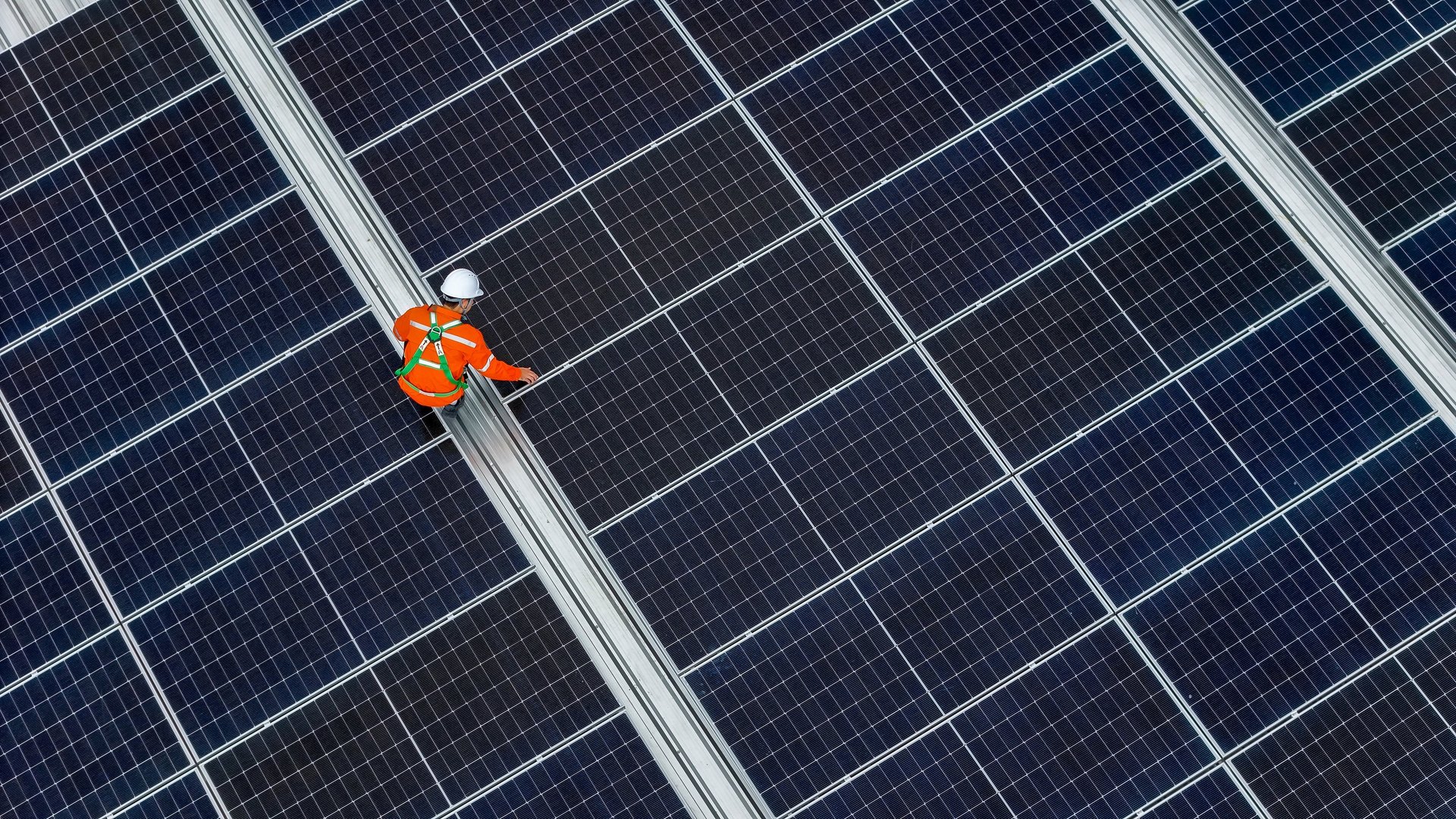
Solar System Not Producing
Zero production and low production are different problems. So is an app that shows nothing at all. Working out which you have narrows the cause considerably.
Whole system versus part of it
If everything is down, suspect the inverter or the grid connection. If some panels report and others do not, suspect the individual units. That distinction is the fastest way to narrow the diagnosis.
Zero versus reduced
A sudden zero is an event — something changed on a particular day. A gradual decline is a trend, and trends are usually shading, soiling, or progressive equipment decline. Both are worth diagnosing, but they are not the same call.
Why we start with data
Without monitoring history it is hard to tell a real drop from ordinary seasonal variation. Where monitoring is absent or broken, restoring it is often part of the diagnostic.
Start with the utility meter, not the app
When the app shows nothing, homeowners often assume the worst. The quickest way to find out whether the system is actually working is to look at utility usage during daylight hours. If consumption still drops to near zero on a sunny day, the system is almost certainly producing and only the reporting has failed.
What a sudden stop suggests
Production that stops on a specific day points to an event. That could be an inverter fault, a breaker that tripped, a grid interruption, or a storm-related issue. Production that erodes over weeks or months is a different pattern entirely, and usually points to shading, soiling, or progressive equipment decline.
Why it matters that you establish which
The two patterns lead to different fixes and very different costs. Diagnosing on the basis of which pattern you have prevents the common mistake of replacing equipment when the actual problem was a shaded section or a loose connection.
Likely Causes, in the Order We Check Them
Monitoring failure
No data at all usually means the gateway or network, not the solar system.
Inverter shutdown
A faulted or overheated inverter stops production entirely.
Failed component on part of the array
A dead optimizer or microinverter takes down one section, not everything.
Shading or soiling
Gradual decline across the whole array often traces to trees or accumulated soiling rather than equipment.
What You Can Check Yourself
None of this requires going on the roof. Anything involving the array itself is best left to a technician.
Still Not Working?
We diagnose and repair existing systems across Napa, Sonoma, Marin, Solano and Contra Costa counties.