
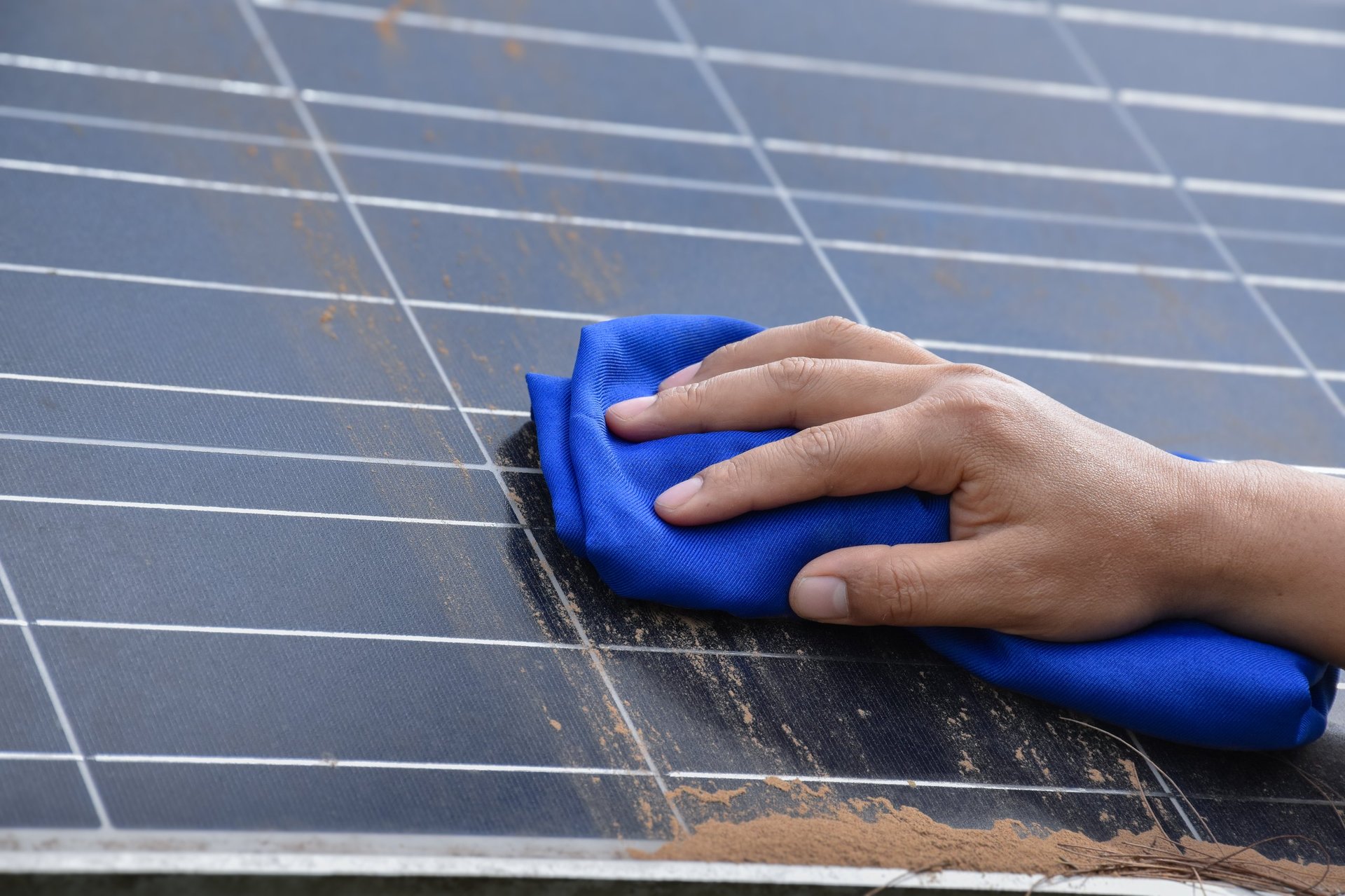
In Northern California, solar panels accumulate a surprising amount of material over a season: fine dust, tree pollen in spring, bird droppings, and — in recent years — wildfire ash. Each of these blocks light before it reaches the cells, and blocked light is simply production you do not get.
The amount varies enormously with location. A panel near a busy road, under trees, or downwind of agricultural dust collects far more than one on a clean coastal roof. That is why general figures about soiling losses are only ever a rough guide — the useful question is what is happening on your roof.
What soiling actually does
A uniform layer of dust reduces output gradually and can be easy to miss, because there is no dramatic failure. Uneven soiling is worse: bird droppings or a streak of ash can shade part of a panel, and in a series-wired string, a shaded cell drags down the output of the whole string rather than just that panel.
This is why two identical systems can perform differently. On a microinverter system, each panel is independent, so one shaded module affects only itself. On a string system, partial shading is amplified.
How to tell whether soiling is your problem
The practical test is to look at your monitoring data. If production declined gradually over weeks and matches a period of dust, pollen, or smoke, soiling is a plausible explanation. If production fell off a cliff on a particular day, that is far more likely to be equipment — an inverter fault, a failed optimizer, or a tripped breaker.
Comparing your current output against the same month in previous years is also useful, since weather varies and a single month in isolation can be misleading.
When cleaning helps, and when it does not
Cleaning generally helps when soiling is heavy and visible. It rarely helps much when panels look mostly clean, and homeowners frequently overestimate how much dirt is costing them. Panels are designed to be self-shedding to a degree — rain does a lot of the work, particularly on properly tilted arrays.
Where cleaning genuinely matters is after a specific event: wildfire ash settling, a nearby construction project, or a season under heavy pollen.
How to clean safely
- Use plain water and a soft brush — never abrasive pads or harsh chemicals
- Avoid high-pressure washers, which can damage seals and frames
- Do not work on the roof yourself unless you are confident and have appropriate safety equipment — falls are the real risk here
- Clean early morning or late afternoon, when glass is not hot
Roof access is the part worth thinking hardest about. Many homeowners are better served having cleaning combined with a diagnostic visit than climbing up themselves.
Why "clean panels" can still underperform
If you have cleaned your panels and production has not recovered, the cause is something else. Common culprits include a failing inverter, a damaged panel, a monitoring fault that is misreporting production, or a system that was never configured correctly to begin with.
That is the point at which cleaning stops being a maintenance task and becomes a diagnostic question — and the difference matters, because the remedy is entirely different.
Where to go from here
If production is down and you are not sure why, the fastest route is a proper diagnostic that separates soiling from equipment failure rather than guessing. We diagnose and repair existing systems across the Bay Area and can tell you whether cleaning is likely to be enough.
Soiling versus shading
Homeowners often confuse the two. Soiling is material sitting on the glass; shading is something blocking light from reaching it — a tree branch, a new chimney, a neighbouring building. Shading is permanent until the obstruction changes, so no amount of cleaning solves it.
A useful distinction: if a panel is consistently underperforming at the same time of day, every day, that pattern is shading. If the whole array declines unevenly over weeks, soiling is more likely. Both are worth diagnosing, because the remedies are completely different.
Frequently asked questions
How often should solar panels be cleaned?
There is no single schedule that fits every roof. Panels on a clean, open site may go a year or more without meaningful soiling. Panels under trees, near a dirt road, or in an area that receives wildfire ash may need attention far more often. Watch production trends rather than the calendar.
Does rain clean my panels?
Steady rain removes loose dust reasonably well and is part of why panels mostly look after themselves. It does not remove bird droppings, sticky pollen residue, or ash that has baked on. Those need contact cleaning.
Can dirty panels damage my system?
Soiling itself does not damage equipment — it reduces output. The risk comes from what soiling can hide: a hotspot under a heavily shaded cell, or debris that has physically blocked ventilation around equipment. That is one reason stubborn, uneven soiling is worth looking into rather than ignoring.
Is it worth paying someone to clean my panels?
That depends on how much soiling you actually have and what roof access involves. If cleaning is likely to recover meaningful production, it is usually worth it. If you are being sold annual cleaning on a clean array, the value is questionable.
Why is only part of my array dirty?
Bird activity, tree overhang, and wind patterns are rarely uniform. One section sitting under a roost or downwind of a dusty surface will collect more than the rest. On string systems, that uneven section can affect more than its own output.