
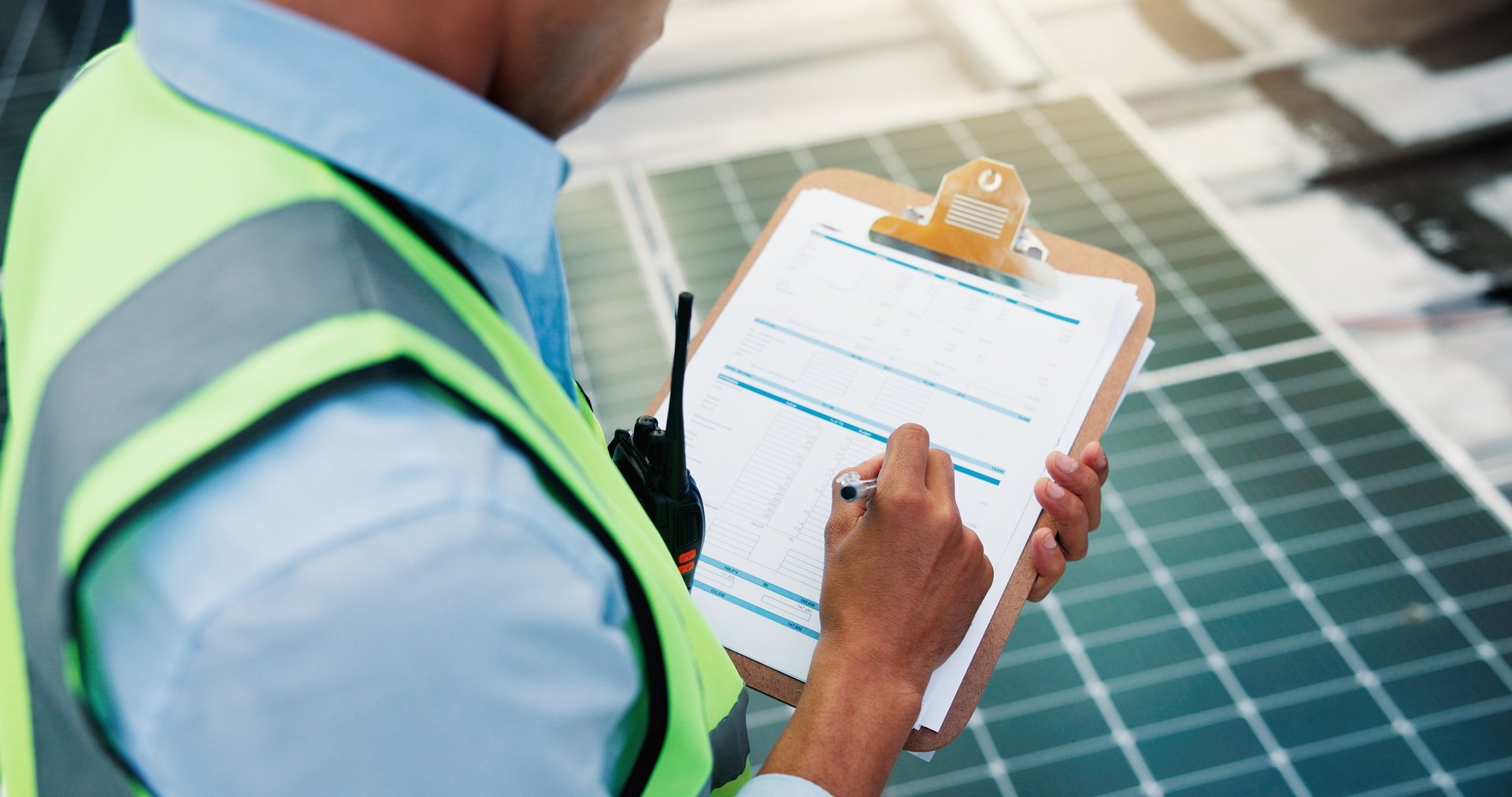
A solar system can fail in ways you cannot see from the ground. Panels look fine, the house has power, and nothing appears wrong — while the array has been producing a fraction of what it should for weeks. Monitoring is the only reliable way to catch that early.
What a monitoring system actually measures
At its core, monitoring records how much energy the system is producing over time. Modern platforms go further, reporting per-panel or per-string data, identifying underperforming modules, and in some cases comparing your actual output against an estimate based on local weather.
That last feature is genuinely useful, because raw production numbers are hard to interpret on their own. A cloudy week naturally produces less. A tool that shows expected versus actual helps you separate weather from failure.
The main platform types
Manufacturer platforms
Most equipment makers provide their own monitoring. Enphase systems report through Enphase's platform, SolarEdge through its own, Tesla Powerwall and solar through Tesla's app. This is usually the most detailed data you can get, because the platform is built around that specific hardware.
Third-party and whole-home monitors
Some systems separate monitoring from the inverter entirely, using a clamp-based device that measures production at the electrical panel. These can work across multiple brands and sometimes also track home consumption. The trade-off is usually less per-panel detail.
Metrics worth paying attention to
- Daily and monthly production compared with the same period last year
- Per-panel output, where available — one panel reporting near zero while others are normal is a strong signal
- System status — whether the equipment is communicating and whether it reports any fault
- Consumption versus production, if your monitor tracks both
Why monitoring goes dark
A very common service call is simply "my app stopped showing data." The causes fall into two broad groups.
The first is a communications problem: the gateway lost Wi-Fi, a router changed, a password was updated, or a cellular modem stopped reporting. These are common after a home network change, and the system may still be producing perfectly.
The second is an equipment problem: the monitoring hardware itself failed, or the inverter has stopped and therefore stopped reporting. Distinguishing between these matters, because the first is a network fix and the second is a repair.
A quick check you can do yourself
If your monitoring stopped, first check whether the system is still producing by looking at your utility usage during daylight hours — if consumption drops to near zero on a sunny day, the system is likely still generating. Then check whether the monitoring gateway is powered and connected to your network. That tells you whether you are looking at a comms issue or something more.
Getting monitoring access back
Where the original installer is gone, homeowners sometimes find they cannot log in to the manufacturer platform, or that the system is registered under a company account they do not control. This is fixable more often than people expect, but it usually requires a transfer of the system's manufacturer record to the homeowner.
We regularly help homeowners regain access to Enphase and SolarEdge monitoring where the original installer is no longer operating.
What to do if your data looks wrong
If monitoring is working but the numbers look off — production far below expectations, a panel reporting zero, or values that do not reconcile with your utility bill — that is worth a diagnostic. Monitoring is a tool for spotting problems, not a diagnosis on its own.
Setting up a useful baseline
The most valuable thing monitoring gives you is not the live number — it is the history. A system with a year of recorded data makes an anomaly obvious. A system with none leaves you guessing whether this month is normal.
If your monitoring has gaps in its history, or was only recently reconnected, it is worth keeping a simple monthly record of production for a while. That baseline is what turns "the bill seems high" into a question a technician can answer with evidence.
Frequently asked questions
My app shows production but my bill hasn't changed. Why?
Production and bill savings are not the same number. A bill can stay high because consumption rose, because the system is exporting power that is credited at a lower rate than it is drawn back, or because a rate schedule changed. Comparing production against consumption is more informative than looking at either alone.
Can I add monitoring to a system that never had it?
In many cases, yes. Some systems can have a monitoring gateway or clamp-based monitor added, depending on the inverter model and how the system was wired. Whether it is worthwhile depends on the equipment you have.
I moved into a house with solar. How do I get monitoring access?
Start with the manufacturer platform and try to register the system using the address and equipment serial numbers. If the system is still tied to a previous owner or an installer account, the manufacturer can usually transfer ownership with proof of the property. We help homeowners work through this regularly.
Why does my monitoring disagree with my utility bill?
Small differences are normal — the two measure at different points in the system. Large, persistent discrepancies can indicate a metering fault, a misconfigured CT clamp, or a genuine production problem. If the gap is large, it is worth investigating.
Does monitoring cost extra?
Manufacturer monitoring is typically included with the equipment. Some third-party platforms charge a subscription for advanced features or cellular connectivity. Cost varies by product, so check before committing to a paid tier.